Spleen Conditions
What is the Spleen?
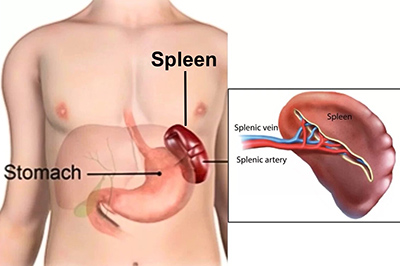
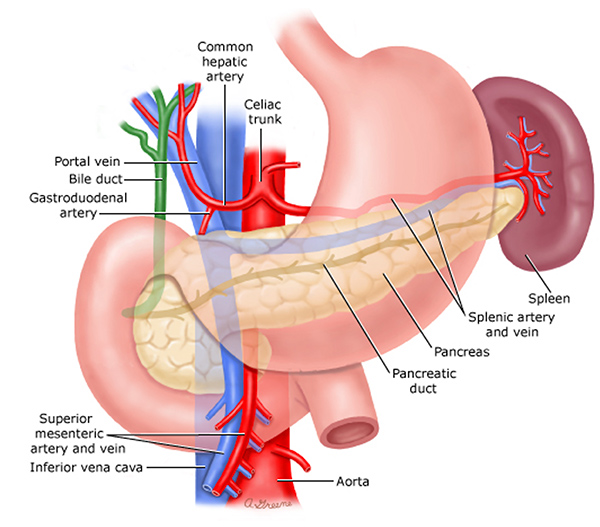
The spleen is an organ located in the upper left side of the abdomen, just beneath the rib cage and next to the stomach.
Although many people are unfamiliar with the spleen, it plays an important role in the body's immune system. It helps filter the blood, remove old or damaged blood cells, store platelets and assist in fighting infection.
Fortunately, most people can live a normal and healthy life without a spleen if it becomes necessary to remove it.
What Conditions Affect the Spleen?
A variety of conditions can affect the spleen, including:
Splenic Cysts
Splenic cysts are fluid-filled sacs within the spleen.
Many are discovered incidentally during imaging performed for unrelated reasons and cause no symptoms. Larger cysts may occasionally cause discomfort, fullness or pain beneath the left ribs.
Benign Splenic Tumours
The spleen may develop a variety of benign growths, including:
- Haemangiomas
- Hamartomas
- Lymphangiomas
Most benign splenic tumours are discovered incidentally and require no treatment.
Splenic Abscess
A splenic abscess is an uncommon infection within the spleen.
Symptoms may include fever, abdominal pain and fatigue. Treatment typically involves antibiotics, drainage or occasionally surgery.
Splenomegaly (Enlarged Spleen)
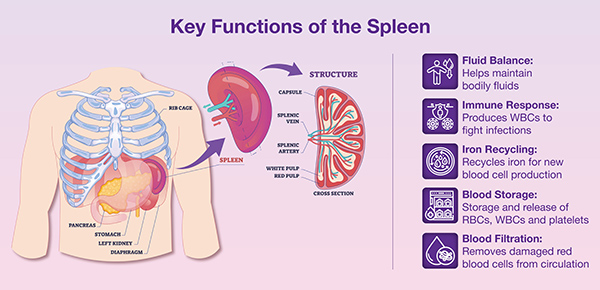
The term splenomegaly simply means enlargement of the spleen.
A wide variety of conditions can cause the spleen to enlarge, including:
- Blood disorders
- Liver disease and portal hypertension
- Viral infections such as glandular fever
- Autoimmune conditions
- Certain cancers
Some blood disorders can cause the spleen to become significantly enlarged and overactive, resulting in excessive destruction of blood cells. This may lead to anaemia, low platelet counts, recurrent infections or abdominal discomfort.
Examples include:
- Hereditary spherocytosis
- Thalassaemia
- Immune thrombocytopenic purpura (ITP)
- Autoimmune haemolytic anaemia
- Myelofibrosis
- Chronic lymphocytic leukaemia (CLL)
- Lymphoma
In selected patients, splenectomy (surgical removal of the spleen) may be recommended to improve blood counts, reduce symptoms or assist in the management of the underlying condition.
Treatment decisions are usually made in conjunction with a haematologist and depend on the specific diagnosis and severity of symptoms.
Splenic Trauma
The spleen is commonly injured following significant abdominal trauma, such as motor vehicle accidents or sporting injuries.
While many injuries can be managed without surgery, severe splenic bleeding may occasionally require urgent intervention.
Can the Spleen Develop Cancer?
Primary cancers of the spleen are uncommon.
More commonly, the spleen may become involved in blood-related cancers such as:
- Lymphoma
- Leukaemia
Occasionally, cancers from other organs may spread to the spleen.
What Are the Symptoms of Spleen Problems?
Many splenic conditions cause no symptoms and are discovered incidentally.
When symptoms occur, they may include:
- Pain or discomfort beneath the left ribs
- A feeling of fullness after eating small meals
- Abdominal bloating
- Fatigue
- Fever
- Unexplained weight loss
The symptoms depend on the specific condition affecting the spleen.
How Are Spleen Conditions Diagnosed?
Blood Tests
Blood tests may identify infection, blood disorders or abnormalities in blood cell counts.
Ultrasound
Ultrasound is often the first investigation used to examine the spleen.
CT Scan and MRI
CT and MRI scans provide detailed information about the size, structure and appearance of the spleen and are often the most useful imaging investigations.
Additional Tests
Depending on the suspected condition, specialised blood tests, PET scans or tissue biopsy may occasionally be required.
How Are Spleen Conditions Treated?
Treatment depends entirely on the underlying condition.
Observation
Many splenic cysts and benign lesions can be safely monitored with periodic imaging.
Surgery (Splenectomy)
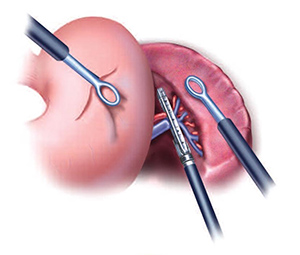
Removal of the spleen, known as a splenectomy, may be recommended when:
- A cyst or tumour is causing symptoms
- There is uncertainty regarding the diagnosis
- The spleen has become excessively enlarged
- There is significant splenic injury or bleeding
- Certain blood disorders are present
Many splenectomies can now be performed using minimally invasive (keyhole) surgery.
Vaccinations
Patients who undergo splenectomy require specific vaccinations to reduce the risk of serious infections after surgery.
These vaccinations are an important part of long-term care following spleen removal.
What Results Can Be Expected?
The outlook depends on the underlying condition.
Most benign splenic lesions have an excellent prognosis and never require treatment.
For patients requiring splenectomy, recovery is usually straightforward and most people return to normal activities within a few weeks.
Although the spleen plays an important role in immunity, the body can generally compensate well following its removal.
When Should I Seek Specialist Advice?
You should seek specialist assessment if:
- A splenic cyst or lesion has been identified on imaging
- You have persistent pain beneath the left ribs
- You have an enlarged spleen
- You have unexplained weight loss
- You have ongoing symptoms related to a splenic condition
Most splenic lesions prove to be benign. However, specialist assessment is important to establish an accurate diagnosis and determine whether treatment or surveillance is required.
Frequently Asked Questions
Can you live without a spleen?
Yes. Most people live normal lives after splenectomy, although additional vaccinations and infection precautions are required.
Are splenic cysts cancerous?
Most splenic cysts are benign and do not become cancerous.
Do all spleen lesions require surgery?
No. Many splenic lesions can be safely monitored with periodic imaging.
Is spleen surgery performed laparoscopically?
Yes. Many splenectomies can be performed using minimally invasive keyhole techniques.
What happens if the spleen ruptures?
A ruptured spleen can cause significant internal bleeding and may require urgent treatment, including surgery in severe cases.