Gastrointestinal Stromal Tumour (GIST)
What is a Gastrointestinal Stromal Tumour (GIST)?
A Gastrointestinal Stromal Tumour (GIST) is a rare tumour that arises from specialised cells within the wall of the gastrointestinal tract.
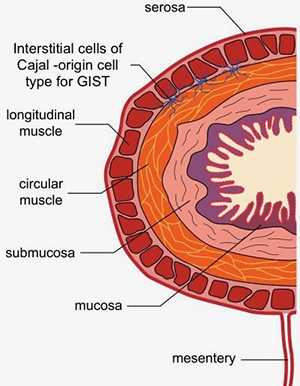
Unlike the more common cancers of the stomach or bowel, GISTs develop from the supporting tissues of the digestive tract rather than from the lining (mucosa). They are thought to arise from the Interstitial Cells of Cajal, which help regulate the movement of food through the digestive system.
GISTs can occur anywhere along the gastrointestinal tract, but most commonly arise in:
- The stomach (approximately 60%)
- The small intestine (approximately 30%)
- The oesophagus, colon or rectum (less commonly)
The behaviour of GISTs varies considerably. Some are small and slow-growing, whilst others have the potential to behave more aggressively and spread to other organs.
Is a GIST Cancer?
GISTs are generally regarded as a type of soft tissue tumour with malignant potential.
Fortunately the majority of GISTs behave in a relatively benign fashion and may never cause significant problems. They often may be discovered incidentally whilst having surgery (or imaging) for an unrelated condition. However sometimes they may have the potential to grow, recur after treatment or spread to other parts of the body, most commonly the liver or lining of the abdominal cavity.
The risk of aggressive behaviour depends on several factors including:
- Tumour size >5cm- this is perhaps the most important factor
- Location within the gastrointestinal tract
- Mitotic rate (how rapidly the tumour cells are dividing)
- Whether the tumour has ruptured
For this reason, every GIST should be assessed carefully by a specialist team.
What Causes GIST?
Most GISTs develop because of mutations in genes that control cell growth, most commonly the KIT or PDGFRA genes.
These mutations cause cells to grow and divide in an uncontrolled manner.
In the vast majority of patients, these mutations occur spontaneously and are not inherited.
There are no known lifestyle, dietary or environmental factors that have been shown to cause GIST.
What Are the Symptoms?
Many small GISTs cause no symptoms and are discovered incidentally during surgery or imaging performed for unrelated reasons.
When symptoms do occur, they may include:
- Abdominal discomfort or pain
- A feeling of fullness after eating small amounts of food
- Nausea
- Vomiting
- Gastrointestinal bleeding
- Black bowel motions (melaena)
- Iron deficiency anaemia
- Fatigue
- An abdominal lump
- Unexplained weight loss
Symptoms often develop gradually and depend largely on the size and location of the tumour.
How is a GIST Diagnosed?
Laparoscopy
It is quite common to discover small GISTs, particularly on the stomach, during surgery for unrelated conditions- eg during bariatric surgery for obesity management, or hiatal hernia surgery for reflux. These small GISTs can usually be removed during the same procedure with curative intent without the need for any further imaging or investigations.
Endoscopy
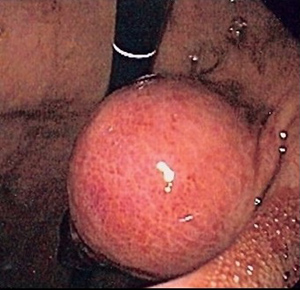
Many GISTs are first identified during gastroscopy or colonoscopy.
They often appear as a smooth bulge beneath the lining of the gastrointestinal tract because the tumour arises from deeper layers of the bowel wall.
Endoscopic Ultrasound (EUS)
Endoscopic ultrasound is particularly useful for assessing GISTs within the stomach and upper gastrointestinal tract.
It allows detailed visualisation of the layers of the bowel wall and can often determine whether the lesion is arising from the muscular wall of the stomach.
In some cases, a needle biopsy can be obtained during the procedure.
CT Scan
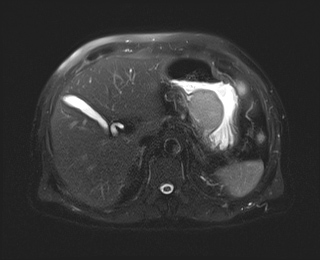
CT scanning is the most important imaging study for evaluating GISTs.
It helps determine:
- Tumour size
- Tumour location
- Involvement of adjacent organs
- Whether there is evidence of spread to other sites
Biopsy
A biopsy may be recommended in selected situations, particularly when drug therapy is being considered before surgery.
However, most GISTs do not require pre-operative biopsy, especially when the diagnosis appears straightforward and surgery is already planned, as the full specimen will be sent for detailed histological analysis after removal.
How are GISTs Treated?
Treatment depends on the size, location and biological behaviour of the tumour.
Management is often discussed in a multidisciplinary team involving surgeons, gastroenterologists, radiologists, pathologists and medical oncologists.
Observation
Very small GISTs discovered incidentally may occasionally be monitored with periodic imaging or endoscopic ultrasound.
This approach is generally reserved for carefully selected low-risk lesions that are situated in a difficult part of the Gut to remove.
Surgery
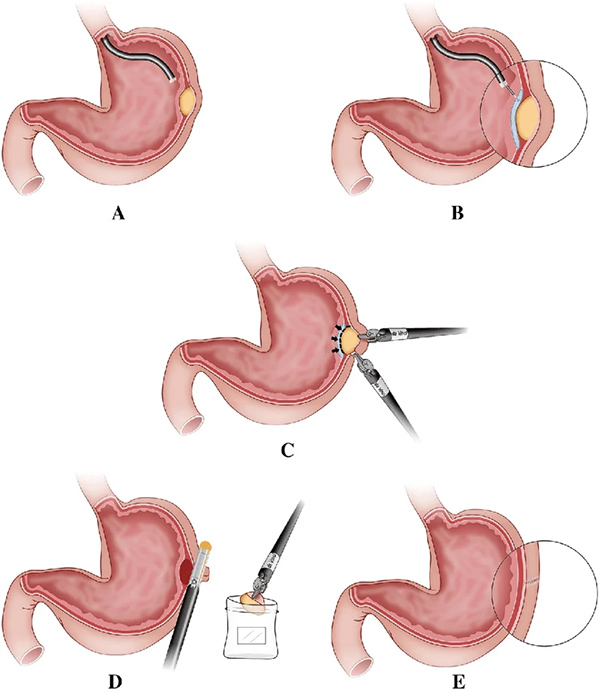
Surgery is the primary treatment for most localised GISTs.
The aim is complete removal of the tumour whilst avoiding rupture of the tumour capsule.
Unlike many gastrointestinal cancers, routine removal of lymph nodes is usually unnecessary because GISTs rarely spread through the lymphatic system.
Depending on the size and location of the tumour, surgery may involve:
- Wedge resection of the stomach
- Partial gastrectomy
- Small bowel resection
- Resection of adjacent structures in selected cases
Many GISTs can be removed using minimally invasive (keyhole) surgery.
One of the other major benefits of surgical removal is the ability to send the entire specimen for details histological analysis by a pathologist- this allows confirmation of the tumour type, and an assessment of its aggressiveness to guide whether any further treatment is needed.
Targeted Therapy (Imatinib)
Some GISTs are treated with a targeted anti-GIST medication called Imatinib.
Unlike conventional chemotherapy, imatinib specifically targets the abnormal proteins responsible for tumour growth.
It may be used:
- Before surgery to shrink large tumours
- After surgery to reduce recurrence risk in higher-risk tumours
- For advanced or metastatic disease
The decision to use imatinib depends on the tumour's genetic profile and risk assessment.
What Results Can Be Expected?
The outlook for patients with GIST has improved dramatically over the past two decades.
Many patients with localised GIST are cured with surgery alone.
For higher-risk tumours, the combination of surgery and targeted therapy has substantially improved long-term outcomes.
The prognosis depends on:
- Tumour size
- Tumour location
- Mitotic rate
- Presence or absence of tumour rupture
- Whether the disease has spread
Following treatment, ongoing surveillance with CT scans or endoscopic assessment is often required.
When Should I Seek Specialist Advice?
You should seek specialist assessment if you have:
- A suspected GIST identified on endoscopy or imaging
- A submucosal stomach lesion requiring further evaluation
- Unexplained gastrointestinal bleeding
- Iron deficiency anaemia without an obvious cause
- Persistent abdominal symptoms associated with a gastrointestinal mass
Because treatment decisions depend on tumour size, location and biological behaviour, specialist assessment is important to determine the most appropriate management strategy.
Frequently Asked Questions
Are GISTs common?
No. GISTs are rare tumours, accounting for less than 1% of all gastrointestinal tumours.
Can a GIST be removed laparoscopically?
Yes. Many stomach and small bowel GISTs can be safely removed using keyhole surgery, depending on their size and location.
Do all GISTs need surgery?
Not necessarily. Very small, low-risk lesions may sometimes be monitored. However surgical removal is strongly recommended for the majority of clinically significant GISTs.
Can GIST spread?
Yes. Some GISTs have the potential to spread, most commonly to the liver or lining of the abdominal cavity.
Is chemotherapy required?
Traditional chemotherapy is generally ineffective against GIST. When drug treatment is required, targeted therapies such as imatinib are typically used instead.