Hiatus Hernia
What is a Hiatus Hernia?
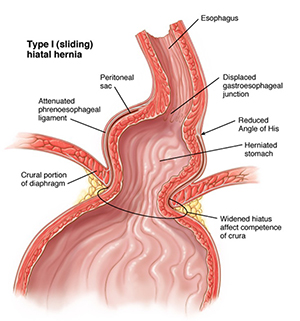
A hiatus hernia is a type of internal hernia where part of the stomach moves upward through an opening in the diaphragm (called the hiatus) into the chest cavity. Unlike hernias elsewhere in the body, a hiatus hernia cannot be seen or felt externally because it occurs deep inside the body. There are two main types of hiatus hernia; sliding and paraoesophageal. Although they have slightly different presentations (see below) they are treated in the same way. Hiatus hernias are commonly diagnosed through investigations such as:
- CT scan of the chest or abdomen
- Upper endoscopy (gastroscopy)
- Chest X-ray
- Barium swallow imaging
Many people may be unaware they have a hiatus hernia until it is discovered during investigations performed for other reasons.
What Symptoms Can a Hiatus Hernia Cause?
Many hiatus hernias cause no symptoms and are discovered incidentally during investigations performed for other reasons. When symptoms do occur, they generally fall into two broad categories: reflux symptoms and mechanical symptoms. Although there is often overlap, sliding hiatus hernias typically cause reflux symptoms, whereas paraoesophageal hernias are more likely to produce mechanical symptoms due to obstruction of the lower oesophagus or herniated stomach.
Reflux Symptoms
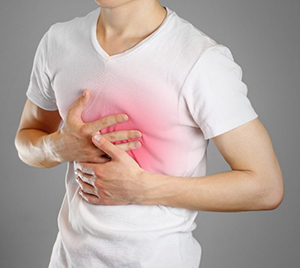
Reflux symptoms result from impairment of the anti-reflux valve and may include:
- Heartburn
- Acid regurgitation
- Chest discomfort
- Chronic cough
- Voice hoarseness
- Frequent throat clearing
Mechanical Symptoms

Mechanical symptoms occur when the lower oesophagus or herniated stomach in the chest becomes distorted or partially obstructed and may include:
- Difficulty swallowing (dysphagia)
- Early satiety
- Post-meal chest discomfort or pressure
- Bloating and belching
- Shortness of breath after eating
- Nausea or vomiting
Large paraoesophageal hernias can occasionally cause obstruction or twisting of the stomach (gastric volvulus), resulting in severe pain, vomiting and difficulty swallowing. This requires urgent medical attention.
What Causes a Hiatus Hernia?

The cause of hiatus hernias is not fully understood; however several risk factors appear to contribute including:
- Increasing Age leading to gradual weakening of crural muscles and attenuation of the phreno-oesophageal ligament
- Family history
- Female gender
- Obesity especially with central adiposity
- Pregnancy
- Chronic coughing
- Heavy lifting
- Repeated straining during bowel motions
- Congenital hiatus hernia
Most hiatus hernias likely develop from a combination of several of these factors rather than a single cause.
How is a Hiatus Hernia Diagnosed?
Hiatus hernias are commonly diagnosed either on CT imaging, where the stomach can be clearly seen protruding through the diaphragm into the chest, or at upper endoscopy.
Upper endoscopy involves passing a flexible camera through the mouth into the oesophagus and stomach. This allows direct visualisation of the anatomy and can also identify associated problems such as reflux inflammation, Barrett's oesophagus or ulcers.
Many hiatus hernias are discovered incidentally during investigations performed for unrelated symptoms.
Do All Hiatus Hernias Require Surgery?
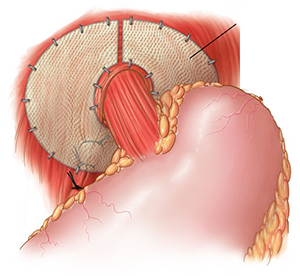
Not necessarily. The decision to repair a hiatus hernia depends on:
- Size of the hernia
- Severity of reflux
- Swallowing difficulties
- Presence of complications
- Overall health considerations
Small, asymptomatic hiatus hernias can generally be safely left alone. However for patients with significant symptoms, surgery can provide substantial improvement in quality of life. Hiatus hernias do not improve on their own and generally enlarge gradually over time. Occasionally, larger hernias can become trapped (incarcerated), obstructed or develop compromised blood supply, potentially requiring urgent surgery. Laparoscopic hiatus hernia repair can address symptoms and prevent more more serious problems arising. Click here to read more about hiatus hernia repair.