Hiatus Hernia Repair
What Is Involved in Laparoscopic Hiatus Hernia Repair?
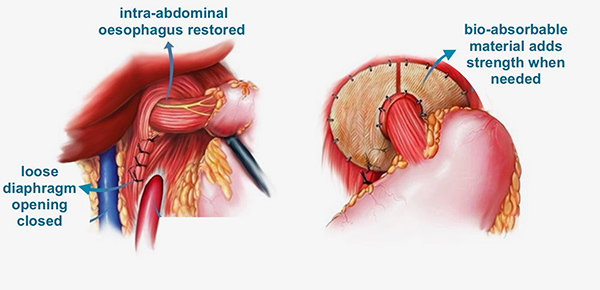
The primary aim of laparoscopic hiatus hernia repair is to restore normal anatomy and rebuild the body's natural anti-reflux barrier.
The procedure is performed using minimally invasive keyhole surgery through five small incisions. Surgery is undertaken under a general anaesthetic, typically takes one to two hours, and usually requires an overnight hospital stay.
The operation involves three key steps:
- Returning the stomach to its correct position beneath the diaphragm
- Repairing the enlarged opening in the diaphragm (hiatus) to its normal size
- Reconstructing the natural supporting ligaments that help maintain the anti-reflux valve
In selected patients, a bioabsorbable mesh reinforcement (Bio-A®) may be used to strengthen weakened diaphragmatic tissue. This material gradually dissolves over approximately six months while stimulating the body's own collagen production, potentially reducing the risk of hernia recurrence.
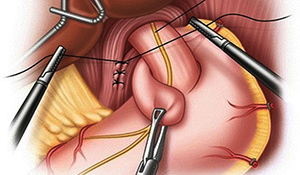
A partial posterior fundoplication (Toupet fundoplication) is commonly performed at the conclusion of the repair to reinforce the anti-reflux valve. Clinical studies have demonstrated that this additional step significantly reduces the risk of reflux following restoration of normal anatomy.
What Is Recovery Like After Hiatus Hernia Surgery?
Patients are encouraged to mobilise shortly after surgery, and clear fluids are usually commenced on the day of surgery. Most patients require only an overnight hospital stay.
Driving is generally permitted after three days, provided you are comfortable, no longer require strong pain medication and can safely perform an emergency stop.
Return to Work
Most patients return to office-based work within one week. More physically demanding occupations may require two to four weeks of recovery.
Dietary Progression
Dietary textures are gradually reintroduced over the first six weeks to allow swelling to settle and the repair to heal.
The typical progression involves:
- Weeks 1 to 2: Smooth fluids
- Weeks 3 to 4: pureed foods
- Weeks 5 to 6: Soft foods
- Week 7 and beyond: return to a normal diet
You will receive detailed dietary instructions following surgery.
Physical Activity
Walking is encouraged immediately after surgery to promote recovery and reduce the risk of complications such as blood clots and chest infections.
For the first six weeks, patients should avoid:
- Lifting more than 10 kilograms
- Heavy gym activities or resistance training
- Abdominal exercises
- Significant pushing, pulling or straining
Unrestricted physical activity can usually be resumed after six weeks.
There are no long-term physical or dietary restrictions following a successful hiatus hernia repair, and most patients return to normal activities without limitation.
Risks and Complications of Hiatus Hernia Repair
Laparoscopic hiatus hernia repair is considered a safe procedure and avoids many of the risks associated with more extensive gastrointestinal surgery because no bowel division or intestinal join is required.
However, as with any operation, complications can occasionally occur.
Potential risks include:
- Bleeding
- Infection
- Anaesthetic complications
- Blood clots
- Hernia recurrence
- Temporary swallowing difficulties
- Injury to surrounding structures
- Temporary fluid collections within the chest
- Reduced ability to belch or vomit
- Temporary bloating or increased wind
Serious complications are uncommon, although individual risks vary according to patient factors and surgical complexity. These risks will be discussed in detail during your consultation.
Frequently Asked Questions
Can a hiatus hernia cause shortness of breath?
Yes. Larger hiatus hernias can occupy space within the chest and compress the lungs, contributing to breathlessness, chest pressure and reduced exercise tolerance.
Can a hiatus hernia cause difficulty swallowing?
Yes. Distortion of the upper stomach and oesophagus can interfere with the passage of food and create a sensation of food sticking after swallowing.
Can a hiatus hernia return after surgery?
Although modern repair techniques are highly effective, recurrence remains possible over time, particularly after repair of larger hernias or when factors that increase abdominal pressure persist.
Will surgery cure my reflux?
Many patients experience substantial improvement or complete resolution of reflux symptoms after surgery. However, outcomes vary, and some patients may still require medication despite successful restoration of normal anatomy.
Why Choose A/Prof Craig Taylor for Hiatus Hernia Repair?
As a specialist Upper Gastrointestinal Surgeon, A/Prof Craig Taylor has extensive expertise in the assessment and minimally invasive repair of hiatus hernias.
After completing his Fellowship in General Surgery with the Royal Australasian College of Surgeons in 2004, A/Prof Taylor undertook additional post-Fellowship training in hiatus hernia and foregut surgery under the mentorship of internationally recognised leaders in the field, including Australian pioneer Professor Leslie Nathanson in Brisbane.
In recognition of this advanced training and ongoing commitment to the specialty, he was awarded membership of the Australian and Aotearoa New Zealand Gastro-Oesophageal Surgery Association (AANZGOSA).
Over the subsequent two decades, A/Prof Taylor has further developed and refined his extensive expertise in the assessment and surgical management of reflux disease, hiatus hernias and complex foregut disorders.
In addition to his clinical work, A/Prof Taylor is actively involved in surgical education and regularly lectures doctors and surgeons on the principles and techniques of hiatus hernia repair. Click here to view a recent lecture given by A/Prof Taylor to medical colleagues on hiatus hernia surgery.