Median Arcuate Ligament Syndrome (MALS)
What is Median Arcuate Ligament Syndrome?
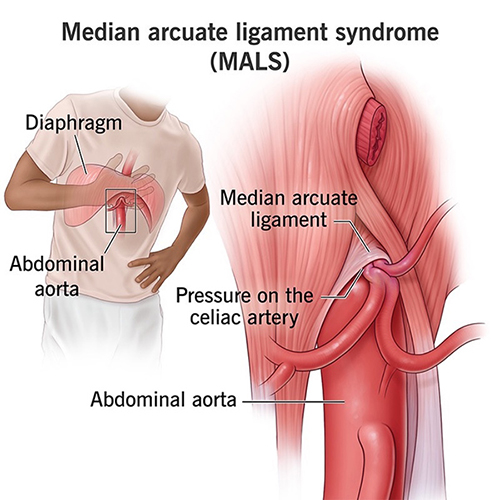
Median Arcuate Ligament Syndrome (MALS), also known as Coeliac Artery Compression Syndrome, is an uncommon condition in which a fibrous band of tissue called the median arcuate ligament compresses the coeliac artery and surrounding nerves at the top of the abdomen.
The coeliac artery is one of the major blood vessels supplying the stomach, liver, pancreas and spleen. The coeliac plexus, a network of nerves that helps regulate abdominal organ function, lies adjacent to this artery.
In some individuals, the median arcuate ligament passes lower than normal and compresses these structures, potentially leading to abdominal pain and other symptoms.
MALS is an uncommon and often under-recognised cause of chronic upper abdominal pain, particularly pain that occurs after eating.
What Causes MALS?
The diaphragm is a large muscle that separates the chest from the abdomen and assists with breathing. The median arcuate ligament is a normal fibrous band that connects the right and left sides of the diaphragm.
In most people, this ligament passes safely above the coeliac artery. In some individuals, however, it lies lower than normal and compresses the artery and surrounding nerves.
Many people have radiological evidence of coeliac artery compression without any symptoms. For this reason, the diagnosis of MALS requires both characteristic symptoms and appropriate imaging findings.
The exact mechanism responsible for symptoms remains debated. Most experts believe symptoms arise from one or both of the following mechanisms:
- Compression of the coeliac artery reducing blood flow during periods of increased demand
- Irritation of the surrounding coeliac plexus nerves
Chronic inflammation and scarring around the compressed structures may also contribute in some patients.
What Are the Symptoms?
Symptoms can vary considerably between patients.
Common symptoms include:
- Upper abdominal pain, particularly after eating
- Pain in the upper abdomen or beneath the ribs
- Early satiety (feeling full quickly)
- Nausea
- Vomiting
- Bloating
- Fear of eating because of pain
- Unintentional weight loss
- Reduced appetite
The pain typically occurs within minutes after eating and may persist for several hours.
Many patients undergo extensive investigations before a diagnosis is established.
Why is MALS Difficult to Diagnose?
MALS is considered a diagnosis of exclusion.
Many other conditions can cause similar symptoms, including:
- Gallstones
- Peptic ulcer disease
- Gastro-oesophageal reflux disease (GORD)
- Functional dyspepsia
- Irritable bowel syndrome
- Chronic pancreatitis
- Mesenteric ischaemia
- Gastric emptying disorders
Because coeliac artery compression can also be seen in healthy individuals, imaging findings alone are not sufficient to make the diagnosis.
A careful clinical assessment is essential.
How is MALS Diagnosed?
Diagnosis usually involves a combination of clinical assessment and specialised imaging.
CT Angiography
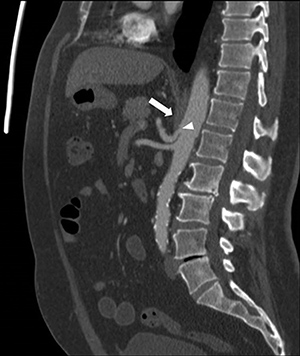
CT angiography is the most commonly used imaging study.
Characteristic findings include narrowing of the coeliac artery at its origin with a distinctive hooked appearance caused by external compression from the median arcuate ligament.
Doppler Ultrasound
Specialised vascular ultrasound can demonstrate increased blood flow velocities across the compressed segment of the coeliac artery.
Findings often become more pronounced during expiration and improve during inspiration.
Magnetic Resonance Angiography (MRA)
MRA may also demonstrate coeliac artery compression and is occasionally used when CT scanning is unsuitable.
Additional Investigations
Upper endoscopy, abdominal ultrasound, gastric emptying studies and other investigations are frequently required to exclude more common causes of symptoms.
What Happens if MALS is Left Untreated?
MALS is not generally considered a life-threatening condition.
However, symptoms can significantly affect quality of life.
Patients may develop:
- Chronic abdominal pain
- Fear of eating
- Progressive weight loss
- Nutritional deficiencies
- Anxiety related to persistent symptoms
The severity of symptoms varies considerably between individuals.
What Treatment Options Are Available?
Treatment is usually reserved for patients with significant symptoms and imaging findings consistent with MALS.
The aim of treatment is to release the compression caused by the median arcuate ligament and remove pressure from the coeliac artery and surrounding nerves.
Laparoscopic Median Arcuate Ligament Release
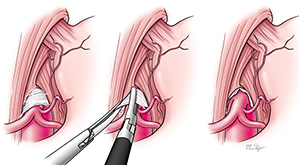
Laparoscopic (keyhole) surgery is the most commonly performed treatment.
During the procedure the median arcuate ligament is divided and the surrounding fibrous tissue is carefully released from the coeliac artery and coeliac plexus.
This relieves the external compression and reduces irritation of the adjacent nerves.
The procedure typically takes approximately one hour and usually involves an overnight hospital stay. Whilst relief of symptoms is often dramatic, a small number of patients may have persistent narrowing of the coeliac artery despite ligament release.
In these circumstances, additional vascular procedures such as angioplasty, stenting or arterial reconstruction may occasionally be required.
What Results Can Be Expected?
Most carefully selected patients experience significant improvement in symptoms following surgery.
However, outcomes are less predictable than for many other surgical conditions because the exact mechanism of symptoms remains incompletely understood.
Patients with classical postprandial upper abdominal pain, significant weight loss and severe coeliac artery compression on CT angiography appear to achieve the best results. Patients whose symptoms are less typical, such as isolated nausea or bloating, generally have less predictable outcomes.
Success rates reported in the medical literature generally range between 60% and 80%.
When Should I Seek Specialist Advice?
You should seek specialist assessment if you experience:
- Persistent upper abdominal pain after eating
- Unexplained weight loss
- Early satiety
- Ongoing nausea or vomiting
- Chronic symptoms despite normal routine investigations
Because MALS is uncommon and can mimic many other gastrointestinal conditions, assessment by an experienced Upper Gastrointestinal surgeon is often required to determine whether the diagnosis is likely and whether treatment may be beneficial.
Frequently Asked Questions
Is MALS common?
No. MALS is an uncommon condition. Although coeliac artery compression is relatively common on imaging, only a small proportion of people develop symptoms.
Can MALS be seen on a CT scan?
Yes. CT angiography is one of the most useful investigations and can demonstrate the characteristic narrowing of the coeliac artery.
Can MALS be found accidentally on a CT scan?
Yes. Compression of the coeliac artery is relatively common and is often seen in people who have no symptoms at all. For this reason, imaging findings alone do not establish a diagnosis of MALS. Symptoms and imaging findings must be interpreted together.
Is surgery always required?
Surgical decompression of the coeliac artery is currently the only definitive treatment for MALS. However, because the diagnosis can be difficult and symptoms overlap with many other gastrointestinal conditions, surgery is generally reserved for carefully selected patients with significant symptoms and imaging findings that strongly support the diagnosis.
Can symptoms return after surgery?
Most patients experience lasting improvement; however, some patients may continue to have symptoms or develop recurrent symptoms over time if scar tissue in the area reaccumulates.
Is MALS dangerous?
MALS is usually not life-threatening, but it can significantly affect quality of life, nutrition and overall wellbeing if symptoms are severe.