Adrenal Gland Tumours
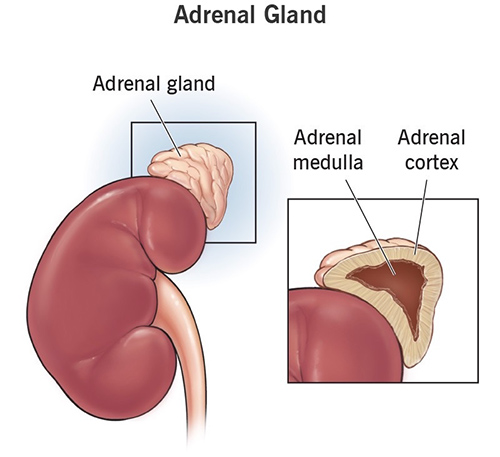
What Are Adrenal Gland Tumours?
The adrenal glands are two small hormone-producing glands that sit on top of the kidneys. They produce a variety of hormones that help regulate blood pressure, metabolism, salt balance and the body's response to stress.
An adrenal tumour is an abnormal growth within one of these glands. Most adrenal tumours are benign (non-cancerous). Many do not cause symptoms at all.
In fact, adrenal tumours are increasingly discovered incidentally during CT or MRI scans performed for unrelated reasons. These are often referred to as "adrenal incidentalomas".
Are Adrenal Tumours Cancerous?
Fortunately, most adrenal tumours are benign.
However, some adrenal tumours can:
- Produce excessive amounts of hormones
- Grow over time
- Occasionally be cancerous
For this reason, any newly discovered adrenal tumour requires careful assessment to determine whether it is hormonally active and whether there are features suggestive of malignancy.
What Types of Adrenal Tumours Occur?
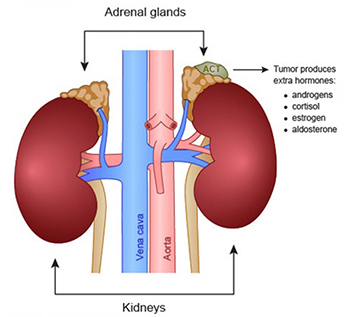
Non-Functioning Adenomas
These are the most common adrenal tumours.
They do not produce excess hormones and are often discovered incidentally during imaging for unrelated reasons.
Functioning Adrenal Tumours
Some adrenal tumours produce excessive amounts of hormones and can cause a variety of symptoms.
Common examples include:
- Aldosterone-producing adenomas (causing high blood pressure and low potassium levels)
- Cortisol-producing tumours (causing Cushing's Syndrome)
- Phaeochromocytomas (producing excess adrenaline-like hormones)
Adrenal Cancer
Adrenocortical carcinoma is a rare cancer arising from the adrenal gland.
These tumours are uncommon but can be aggressive and often require specialist treatment.
What Are the Symptoms?
Many adrenal tumours cause no symptoms and are discovered incidentally.
When symptoms occur, they are often related to excess hormone production.
Symptoms may include:
- High blood pressure
- Headaches
- Excessive sweating
- Palpitations
- Anxiety or panic-like episodes
- Weight gain
- Easy bruising
- Muscle weakness
- Diabetes
- Low potassium levels
Larger tumours may occasionally cause abdominal discomfort or pain.
How Are Adrenal Tumours Diagnosed?
Blood and Urine Tests
Hormone testing is an essential part of adrenal tumour assessment.
These tests help determine whether the tumour is producing excess hormones.
CT Scan and MRI
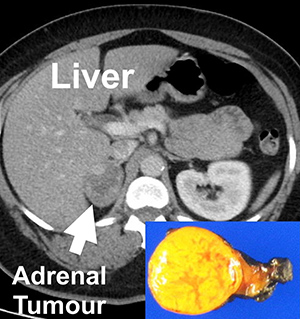
CT and MRI scans provide detailed information about the size and appearance of the tumour.
In many cases, imaging can accurately distinguish between benign and potentially malignant lesions.
Specialised Investigations
Occasionally, additional nuclear medicine scans or other specialised tests may be required.
How Are Adrenal Tumours Treated?
Treatment depends on:
- Whether the tumour is producing hormones
- The size of the tumour
- Its appearance on imaging
- Whether there is concern about cancer
Observation
Small benign-appearing adrenal tumours that are not producing hormones can often be monitored with periodic imaging and hormone testing.
Surgery (Adrenalectomy)
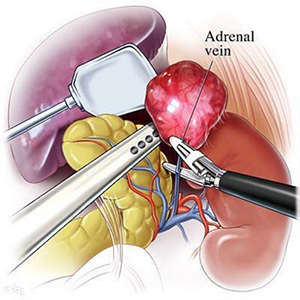
Surgical removal of the adrenal gland may be recommended when:
- The tumour is producing excess hormones
- There is concern about cancer
- The tumour is large or growing
- The diagnosis remains uncertain
Most adrenal tumours can be removed using minimally invasive laparoscopic (keyhole) surgery.
During a laparoscopic adrenalectomy, several small incisions are made and the adrenal gland is removed with specialised instruments. Patients typically spend one or two nights in hospital and recover relatively quickly.
Treatment of Adrenal Cancer
Patients with adrenal cancer often require a combination of surgery and specialist oncological treatment.
Management is usually coordinated through a multidisciplinary team.
What Results Can Be Expected?
The outlook depends largely on the type of adrenal tumour.
Most benign adrenal tumours have an excellent prognosis.
For functioning tumours, surgical removal often results in significant improvement or resolution of hormone-related symptoms.
When adrenal cancer is diagnosed early, surgery offers the best chance of long-term control.
When Should I Seek Specialist Advice?
You should seek specialist assessment if:
- An adrenal tumour has been identified on CT or MRI
- You have unexplained high blood pressure
- You have unexplained low potassium levels
- You have symptoms suggestive of excess hormone production
- You have a growing adrenal lesion
Most adrenal tumours are benign. However, specialist assessment is important to determine whether the tumour requires treatment or can be safely monitored.
Frequently Asked Questions
Are most adrenal tumours cancerous?
No. The vast majority of adrenal tumours are benign.
Do all adrenal tumours require surgery?
No. Many small, non-functioning adrenal tumours can be safely monitored.
Can adrenal tumours cause high blood pressure?
Yes. Certain adrenal tumours produce hormones that can cause severe or difficult-to-control high blood pressure.
Can adrenal tumours be removed with keyhole surgery?
Yes. Most adrenal tumours can be removed using minimally invasive laparoscopic surgery.
What is an adrenal incidentaloma?
An adrenal incidentaloma is an adrenal tumour discovered unexpectedly during imaging performed for an unrelated reason. Most are benign, but they should be properly assessed to exclude hormone production or malignancy.